Blog

My VOX column

VOXeu.org and CEPR gave me the possibility to publish a column on their website. You can find it under this link:

http://www.voxeu.org/article/joint-programming-european-science-and-technology-policy

The piece (written together with Georg Licht) is based on a recent discussion paper of mine, which is also summarized here.

Update: Our VOX column is also featured here (in German)

Update 2: A German version of the article appeared on oekonomenstime.org

New research on immigrant entrepreneurship

Here is a very nice piece of scholarly work by Sari Pekkala and William R. Kerr on immigrant entrepreneurship in the US (NBER working paper version here, and here without the requirements to sign up). The paper provides us with some facts to debunk the very common popular belief that “immigrants steal our jobs”, which is a variant of the implicit misconception that the number of jobs in an economy is fixed. Continue reading New research on immigrant entrepreneurship

The European Union is more appealing to young people

In the face of the British referendum next week I just wanted to mention this interesting report I noticed recently. It statistically confirms an impression I had for a long time, namely that EU skepticism is much more prevalent among older people:

The drop-off in overall EU support in key countries in the past year has been driven by a fall in favorability among older people in particular. In France, EU backing among those ages 50 and older fell 19 points. In Spain it declined 16 points and in Germany 11 points. In each case this was larger than the decline in support among those ages 18 to 34.The drop-off in overall EU support in key countries in the past year has been driven by a fall in favorability among older people in particular. In France, EU backing among those ages 50 and older fell 19 points. In Spain it declined 16 points and in Germany 11 points. In each case this was larger than the decline in support among those ages 18 to 34. Source: Pew Research Center

And here are the numbers:

EU-support_youngsters

Just recently I was in the UK and in the mornings I was usually watching BBC breakfast television. Brexit was of course the dominating topic. One morning they showed a discussion within a typical British family on the pros and cons of leaving the EU. Notable to me was that the two children of the family, a daughter and a son, were arguing in favor of staying whereas the father and the grandmother wanted to leave. Other Brits I talked to at the conference I attended told me that the decision next Thursday will crucially depend on whether the “stay” side will manage to get young voters to the ballot box.

The discussion in the UK is very much dominated by economic arguments. The British were probably never emotionally attached to the Union but they worry about how a Brexit could affect their trade relations to the rest of Europe, what would happen to their economy, and the consequences for London as a financial centre. By contrast, in Germany the EU is always associated with a project that peacefully unites the peoples of the continent. But are these the topics young people are still most concerned with? Are they the most pressing issues in their everyday life?

I think a new narrative is necessary to revitalize this project—for the first time in history establishing political institutions across national borders without using force. Institutions that allow for a deep  cooperation in order to deal with the problems of our times. It seems that young people intuitively sense the need for such a cooperation and the gains they have from it personally: free travel, the possibility to study or work abroad, and to make international friendships, the power to effectively cope with economic crises and environmental problems, and to overcome the often encrusted political systems in their home countries. I sincerely hope that the old and frustrated won’t take this away from us.

Football Sans Frontières

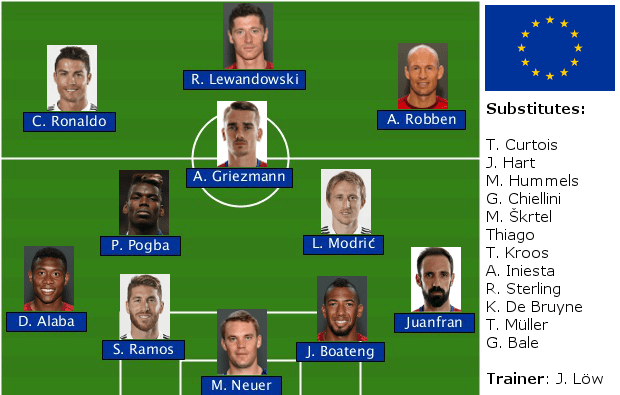
The 2016 UEFA European Football Championship is on and we’ve already seen some great teams on the pitch. But can you imagine how an EU28 Allstar Team would look like? I had lots of fun picking among all these great players. It was definitely not an easy choice but here’s what I came up with. I would love to see this team playing once for example against a South American “selection”. What would your team look like? 

EU_Allstar_Team.png

Does Innovation Policy Really Work?

Last week I had the chance to attend a fantastic conference organized by the Innovation Growth Lab in London on the use of randomized control trials (RCT) in innovation policy evaluation. Field experiments to assess whether certain policies work are already very popular in fields such as development economics. But surprisingly little has been done in OECD countries to this day. Continue reading Does Innovation Policy Really Work?

European Integration in Science and Technology Policy

Recently we published a new discussion paper (updated in September 2017) I was working on for quite some time. My coauthor and me study the effectiveness of subsidies for research and development (R&D) at the European level. Subsidies to support R&D activities by private firms are an essential part of science and technology policy in all OECD countries. Economic theory tells us that (especially small and young) firms invest too little in innovation, either because they’re financially constrained or because their ideas get imitated. Therefore governments should step in to boost R&D and enhance the competitiveness of the economy. Continue reading European Integration in Science and Technology Policy

When laypersons overthink economics

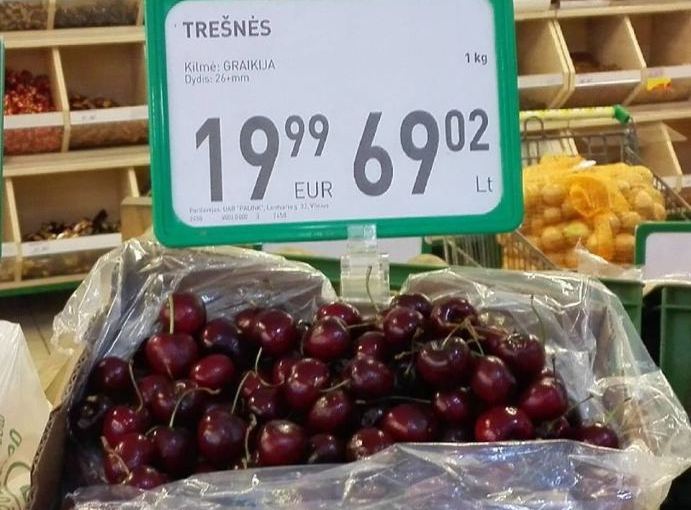
Do you still remember the “Teuro” (a pun from the German word for expensive, teuer, and euro)? Well, my family sure does. In the beginning of the 2000s there was a little restaurant we loved to go occasionally. But then the conversion from German mark to euro came in 2002. Continue reading When laypersons overthink economics

Econ 101: The merits of a market economy

The efficiency of a market-based allocation of goods is something taught very early on to students of economics. But once in a while it’s good to remind ourselves of it, especially since it sounds like propaganda in the ear of some. Ask yourself, in which bus shelter would you rather prefer to wait for the bus. The new and shiny one on the picture above where you’re exposed to the latest fashion advertising. Or the neutral one below? Continue reading Econ 101: The merits of a market economy

The “Bayern Bonus”

After the spectacular dive by Arturo Vidal in yesterday’s DFB Pokal semifinal, which arguably secured the victory for Bayern Munich over Werder Bremen, this research is more topical than ever. Scientists from the Frankfurt School of Finance and the University of Marburg have analyzed 4248 Budesliga games between 2000 and 2014. In particular, their data contain information on all referee decisions and a classification whether the decisions were correct, disputable or clearly wrong. And guess what, focussing only on the 666 clear penalties that were not given by the refs, there is a stark tendency to rule in favor of top teams. Continue reading The “Bayern Bonus”

The problem with classic texts

Over at Orgtheory.net Fabio Rojas expresses the common problems people (not only me, thank god) seem to have with reading the classic texts. They are mostly communication problems. Back in the days it was fashionable to write wordy treatises, much in the style of the classic philosophical texts. Today, short and concise papers that bring across one point at a time are much more appreciated. And if you have to write a thick book then better make it fun to read.
Another point is the difference in language use. It can change quite dramatically over time and sometimes it’s hard to grasp what people meant hundred years ago. That’s especially true when you’re a non-native but reading Kant in German is definitely no pleasure either to me.
However, there is probably too much half-knowledege out there about what the classic texts actually say. Because people are copying from people who haven’t read the texts either. Work on the history of economic thought is therefore much appreciated. In the meantime I should get off my lazy behind and at least start reading Schumpeter.

fabiorojas's avatarorgtheory.net

Marko Grdesic wrote an interesting post on why modern economists don’t read Polanyi. He surveyed economists at top programs and discovered that only 3% had read Polanyi. I am not shocked. This post explains why.

For a while, I taught an undergrad survey course in sociology with an economic sociology focus. The goal is to teach sociology in a way interesting to undergraduate business and policy students. I often teach a module that might be called “capitalism’s defenders and critics.” On defense, we had Smith and Hayek. On offense, we had Marx and Polanyi.

And, my gawd, it was painful. Polanyi is a poor writer, even compared to windbags like Hayek and Marx. The basic point of the whole text is hard to discern other than, maybe, “capitalism didn’t develop the way you think” or “people change.” It was easily the text that people understood the least and none…

View original post 166 more words